For fans of 28 Years Later, The Bone Temple will be a thrilling, chaotic, and visceral follow-up. But if you were hoping for a return to more zombie hordes then I have some bad news for you.
28 Years Later The Bone Temple Review
When 28 Years Later –Danny Boyle and Alex Garland’s long-awaited return to the zombie franchise– debuted fans were hoping for another nail-biting, non-stop thrill ride of survival. But that film most assuredly was not a zombie-infested follow-up. Instead of battles between humans and the infected, we got a smidgeon of zombie horror and a whole lot of reflection on what humanity would look like post apocalypse. That worked for some viewers and in terms of story progression, this somber more inflective turn makes sense but it still left me (and others I know) wanting more. The seeds planted there have now blossomed through the empty eye sockets of the skulls stacked to the sky in Nia DaCosta’s 28 Years Later: The Bone Temple.
Anyone hoping for more zombie hordes and less human drama won't find it here as The Bone Temple follows the same bloody path as its predecessor. Sure it's violent, almost to the point of making you queasy, but it's not zombie violence, it's human on human carnage. Think Saw meets Hostel with zombies thrown on top like rotting sprinkles on ice cream. It's visceral, tense, and nihilistic while also offering some hope for the future. Despite the disappointment in terms of rage virus monsters, the performances by both the benevolent protagonist and the corrupted antagonist are exceptional, making their mark early on in the year.
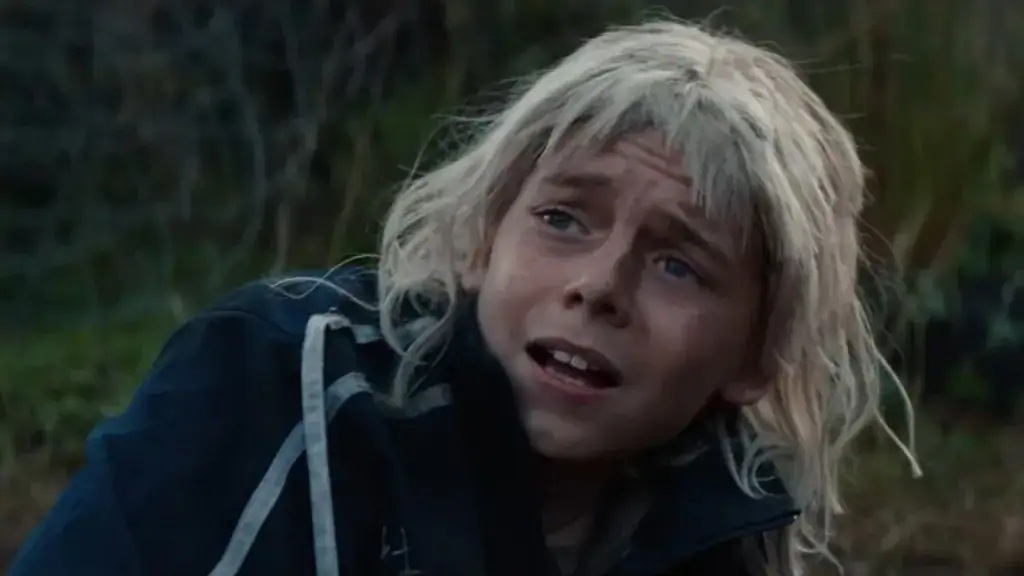
The Bone Temple initially begins by following Spike (Alfie Williams) and his official induction into the Jimmys by Sir Lord Jimmy Crystal (Jack O’Connell). This gang of psychopaths go around hunting infected and humans alike, which means Spike must kill one of them in order to have a “safe” place in the group. Jimmy isn't just some sadistic fool, he's a satanist who thinks he is the son of satan and that everyone is living in hell. He believes he is doing the work of the devil by cleansing the souls of those he encounters. This manifesto leads him on a collision course with Dr. Ian Kelson (Ralph Fiennes), who is actually the film's main focus. Kelson has not only befriended Samson (Chi Lewis-Parry) but has also discovered new facts about the Rage virus courtesy of the Alpha. His mission, his dedication to memento mori (“remember you must die”) and memento amoris (“remember you must love”) are in exact opposition to Jimmy's gleeful slaughter. Their meeting is explosive (and musical) to say the least.
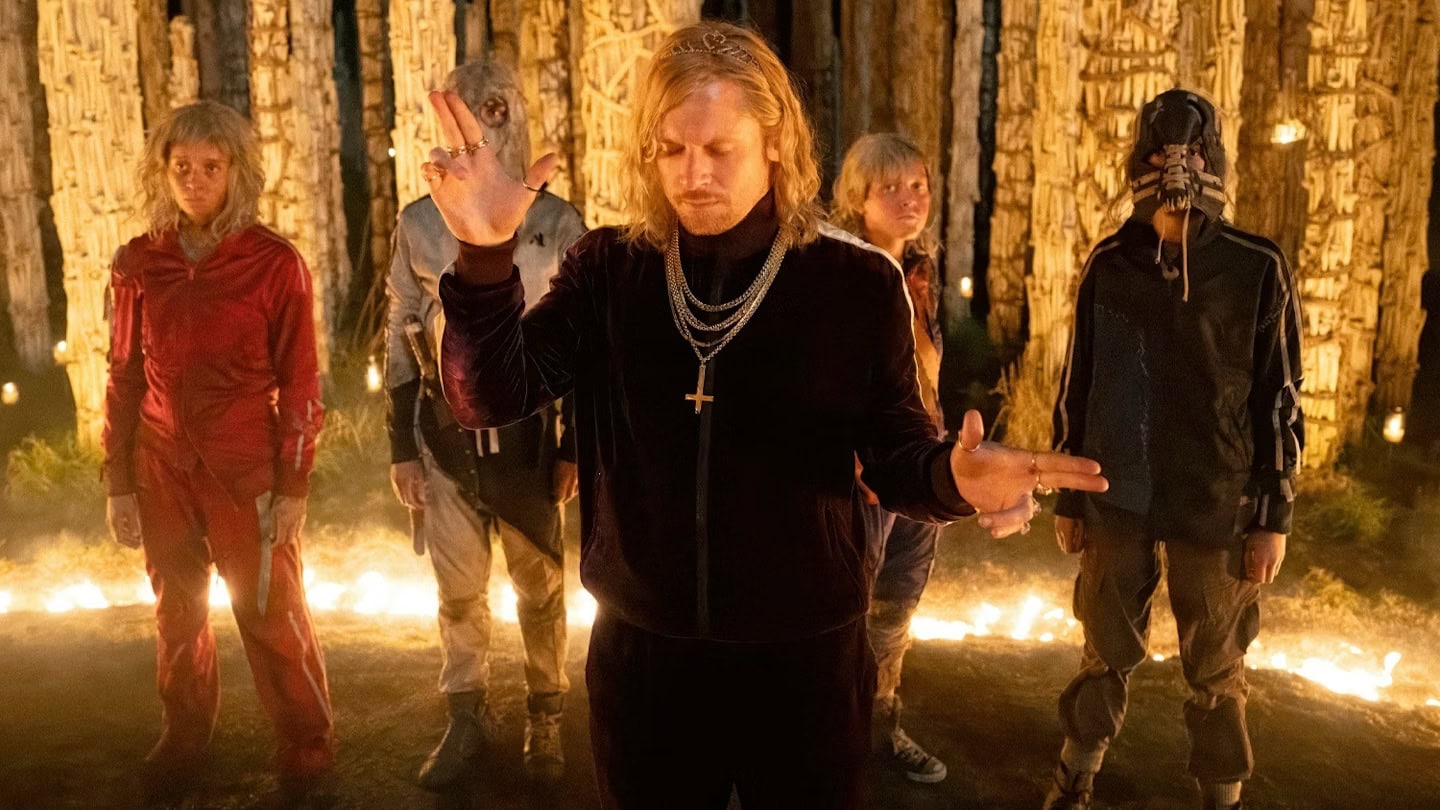
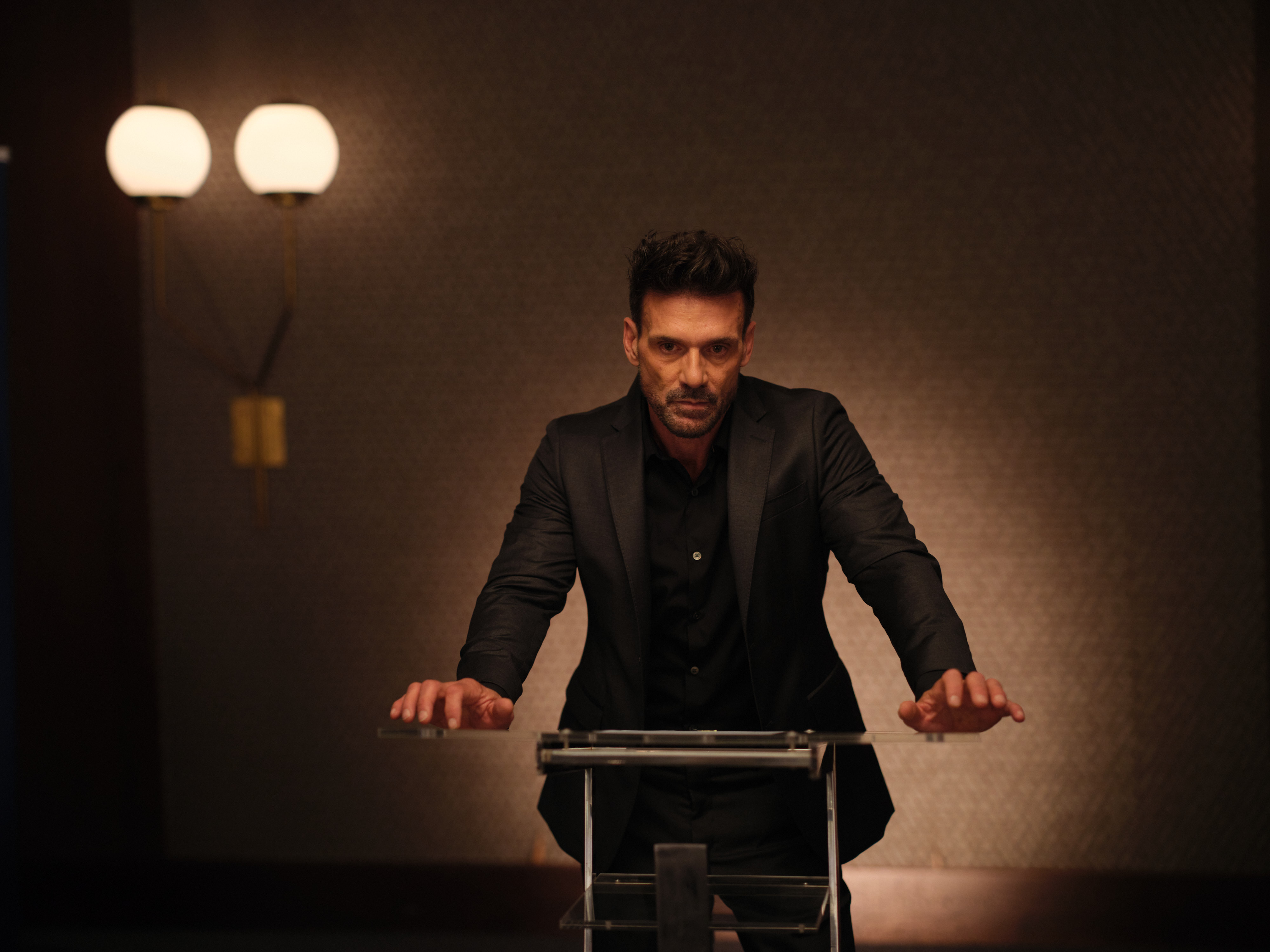
Where Boyle touched on the depravity of mankind post apocalypse, DaCosta goes all in on the direness of the situation. Other humans may have banded together to try to create a new normal (like we saw in 28 Years Later), The Bone Temple shows the uglier side of that coin. The cruelty of humans and what they are capable of doing to each other is on full display, making the rage virus effects look paltry in comparison. All of it is spearheaded by O'Connell's Jimmy, a smiling, rotting teeth sadist who wears a tiara in his dirty blonde hair. Where the zombie violence is more over-the-top and sometimes cartoonish, Jimmy and the Fingers embrace the Saw/Hostel method of violence. It's sadistic, depraved, and can be extremely unpleasant. There is one particular scene that involves skinning victims alive that may be the most violent in the history of the franchise and that's saying something. As we saw in Sinners, O'Connell is damn good at playing the villain, although Jimmy is far less charming than Remmick, he is still so fascinating you can't help but watch even when you want nothing more than to turn away.
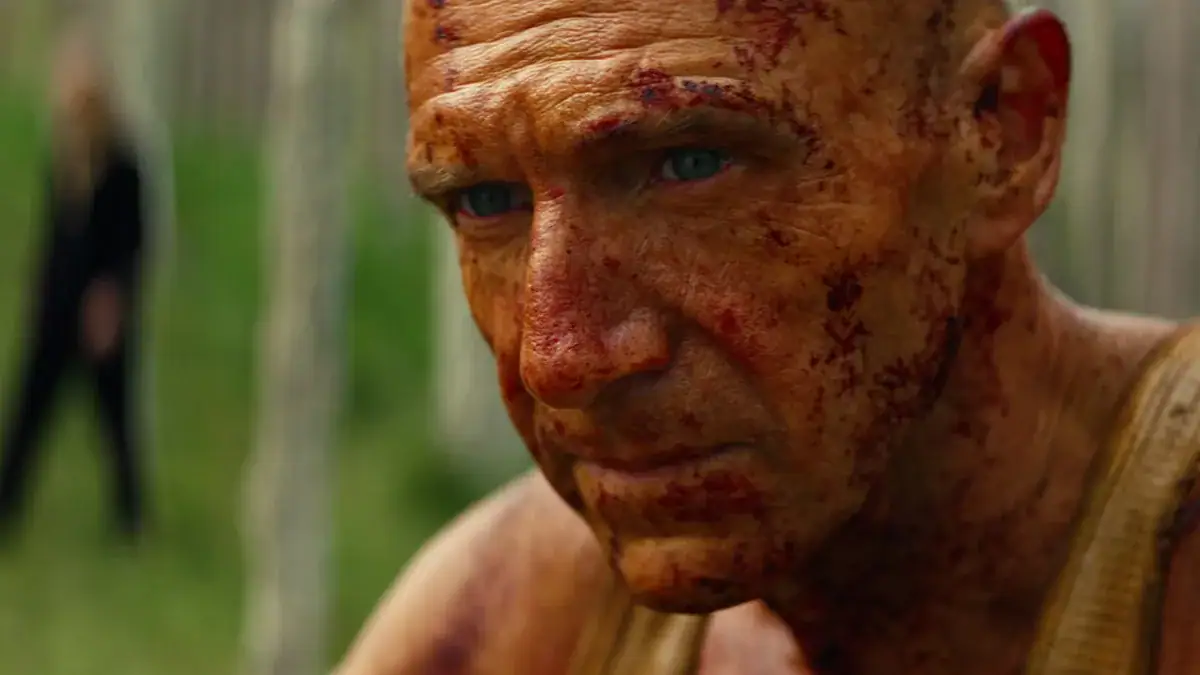
On the other side of the spectrum is Fiennes' Kelson. He is the heart of the story, looking demonic with his skin dyed red due to the iodine but with a heart full of benevolence. At first he appears slightly deranged and wild, but you realize he is just trying to make a way in this world while holding onto what's left of his humanity. Fiennes is once again amazing in this role, with his wry humor, compassion, and determination to survive. There is a massive musical sequence involving Kelson and his acquired record collection that will have people talking. The way it is filmed and Fiennes selling the role of the king of demons is electrifying. If there is someone who gets the short end of the stick in this film it is Spike. He was such a large focal point of 28 Years Later but in The Bone Temple he is relegated to just being on screen almost as just as look here's the kid. Williams is a great young actor and despite his lessened role, he still gets a chance to show why he is someone to watch.
Verdict
Ultimately, 28 Years Later: The Bone Temple is a solid film about two types of humans– ones that rise to the occasion to rebuild after an apocalypse and ones that delight in the darkness that allows them to dive into their most depraved fantasies. The problem is, some fans, like myself, just wanted more zombie action (although I could do without ever seeing alpha “meat” for the rest of my life). The film ends on a promise of more to come. Based on what we see, it could signal a return to survival mode over this deep dive into the human psyche. This is a bridge film, intended to move the plot in a specific direction (which is glaringly obvious) in order to bring about the third film with characters longtime fans are dying to see again. It'll be interesting to see what happens next and if Garland and Boyle turn the ship around or at the very least add more zombies to the mix.
28 Years Later: The Bone Temple releases in theaters on January 16th, 2026. It is rated R for strong bloody violence, gore, graphic nudity, language throughout, and brief drug use with a runtime of 109 minutes.

Leave a Reply