Keep the kids away from this one! Buddy plays like a children’s program from hell, never leaving you prepared for what comes next.
Buddy Movie Review
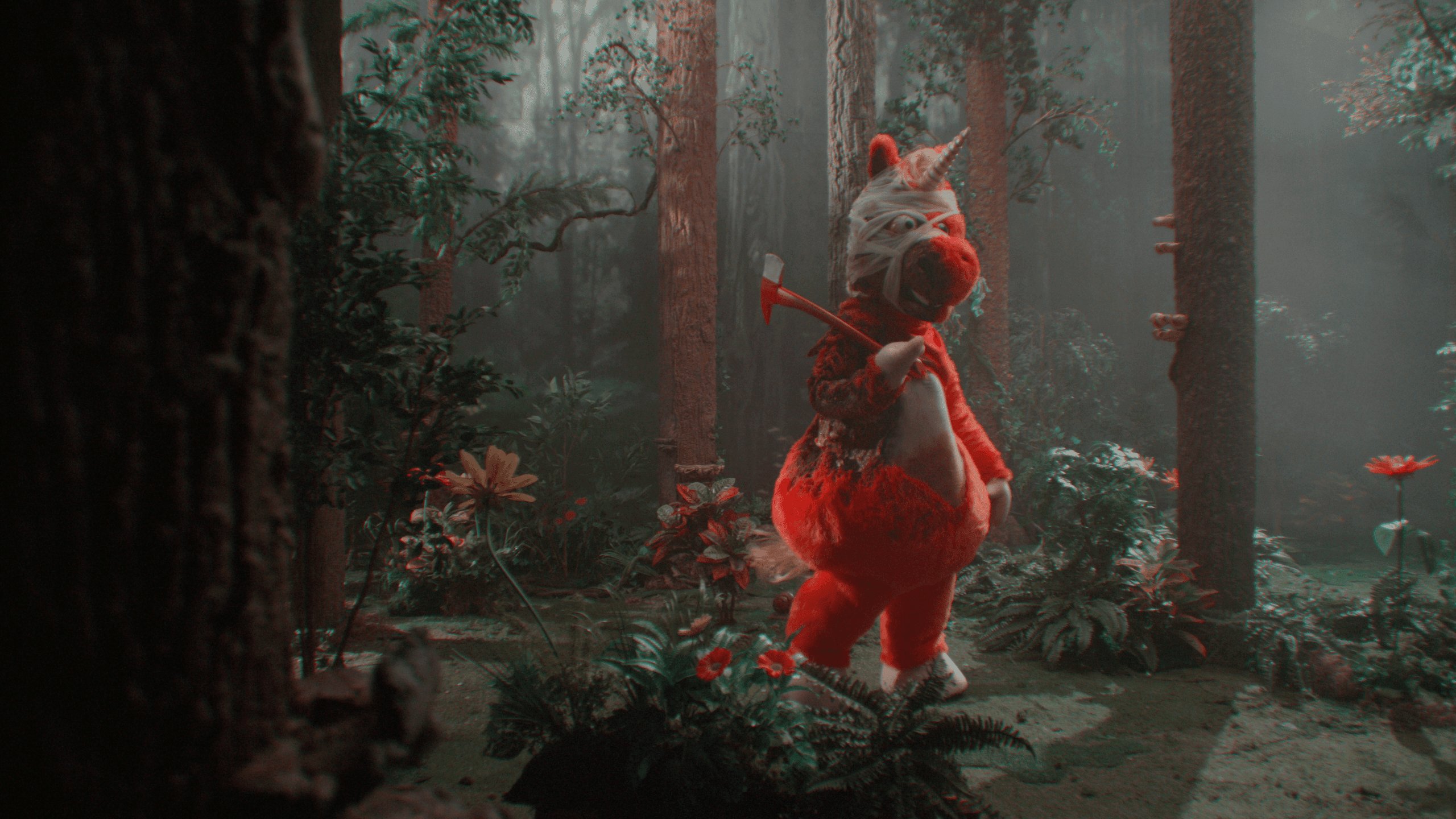
There is something inherently unsettling about children’s television once you strip away the innocence. The oversized characters, bright colors, repetitive songs and forced positivity can become downright creepy with only the slightest shift in perspective. Director Casper Kelly understands that uneasiness and completely weaponizes it in BUDDY, an eerily crafted horror film told through a bloody, deranged and sadistic lens.
Kelly, whose wonderfully bizarre résumé includes Too Many Cooks, work on Mandy and the “Fun Size” segment of V/H/S/Halloween, co-writes the film with Jamie King and creates what initially feels like a completely normal children’s program. There are colorful sets, songs, lessons and children enthusiastically playing alongside their larger-than-life host, Buddy, an enormous orange unicorn voiced by Keegan-Michael Key. But the moment that manufactured happiness begins to crack, BUDDY reveals what it really is. And Buddy is definitely NOT here to make friends.
The film follows Freddy (Delaney Quinn) and Wade (Caleb Williams) as they begin questioning the strangely artificial world surrounding them. What makes Kelly’s concept work so well is that BUDDY never completely abandons its children’s television identity once the horror arrives. Instead, it corrupts it. Friendly lessons begin feeling threatening, positivity becomes controlling and the colorful world around these children slowly transforms from a playground into something closer to a prison.
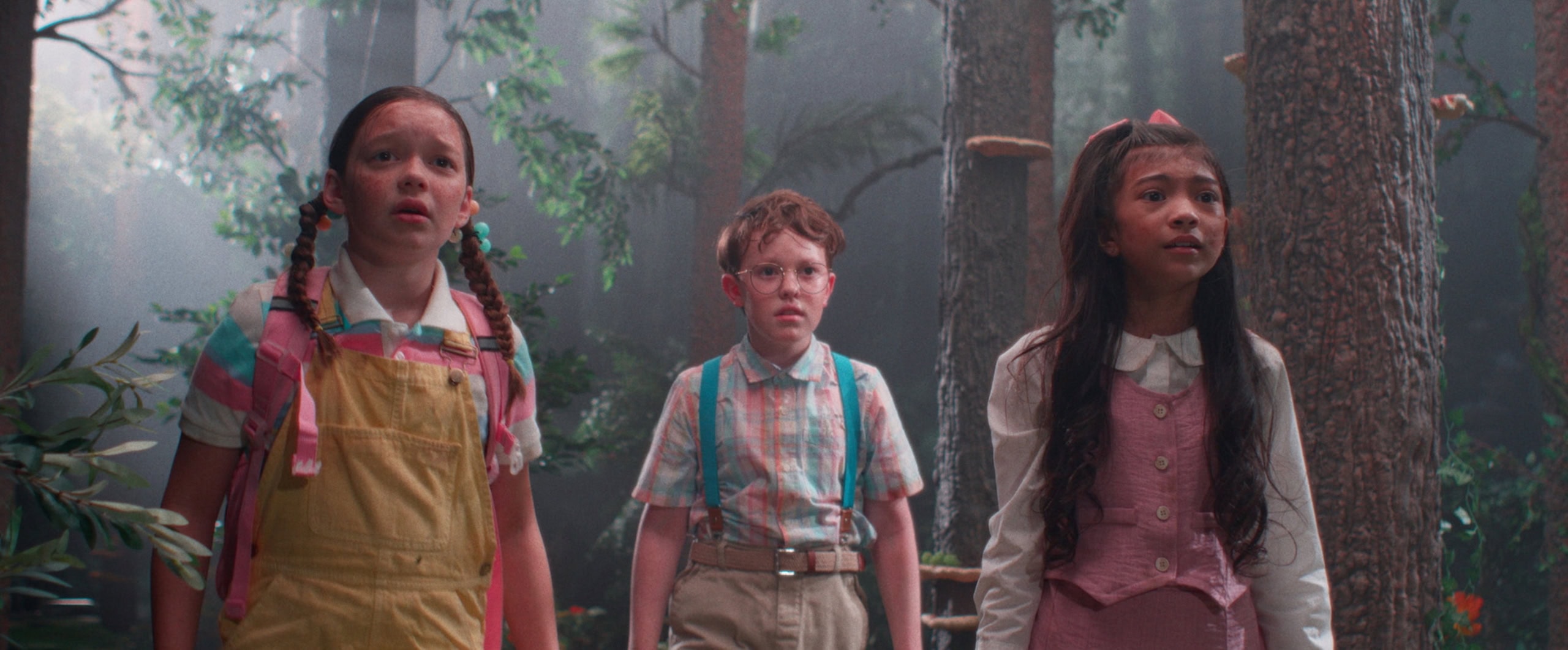
Key has an absolute blast with Buddy. His voice remains warm and exaggerated enough to sell the children’s host persona, even when everything happening around him becomes increasingly sinister. That contrast makes Buddy far more unsettling than if Key simply played him as an obvious monster from the beginning. But the real standouts here are Delaney Quinn and Caleb Williams. Both young performers are asked to carry surprisingly complicated material, and Quinn especially does an incredible job navigating Freddy’s transformation from enthusiastic children’s television personality to a kid realizing something is seriously wrong. Williams brings just as much commitment to Wade, and together they become the emotional center of all the insanity happening around them.
The supporting ensemble includes Cristin Milioti, Topher Grace, Michael Shannon, Patton Oswalt, Luke Speakman, Madison Skyy Polan, Tristan Broders and Phuong Kubacki, with Sergey Zhuravsky physically performing Buddy alongside Key’s voice work. It’s an impressive collection of talent for something this unapologetically bizarre. Milioti deserves special recognition. After The Penguin, we’ve already seen how effortlessly she can tap into psychological darkness, and BUDDY gives her another opportunity to play inside that uncomfortable space. As Grace, she grounds the increasingly ridiculous nightmare around her by never treating the terror like a joke. Kelly can throw all the colorful insanity he wants at the screen, but Milioti’s commitment keeps the emotional stakes intact.
The Part of BUDDY I Couldn’t Shake
As effective as the horror is, there was another kind of discomfort I couldn’t ignore. Quinn and Williams are really good. So good, in fact, that I occasionally found myself thinking less about Freddy and Wade and more about the young actors playing them. As BUDDY becomes increasingly violent, disturbing and adult, I couldn’t help wondering how much young performers truly understand about the finished context of material like this while filming it. To be clear, that isn’t an accusation against Kelly, the production or their families, and I’m not suggesting proper safeguards weren’t in place. What I’m questioning is the feeling the finished movie left me with. Because childhood innocence isn’t simply present in BUDDY. It’s part of what makes the horror work.
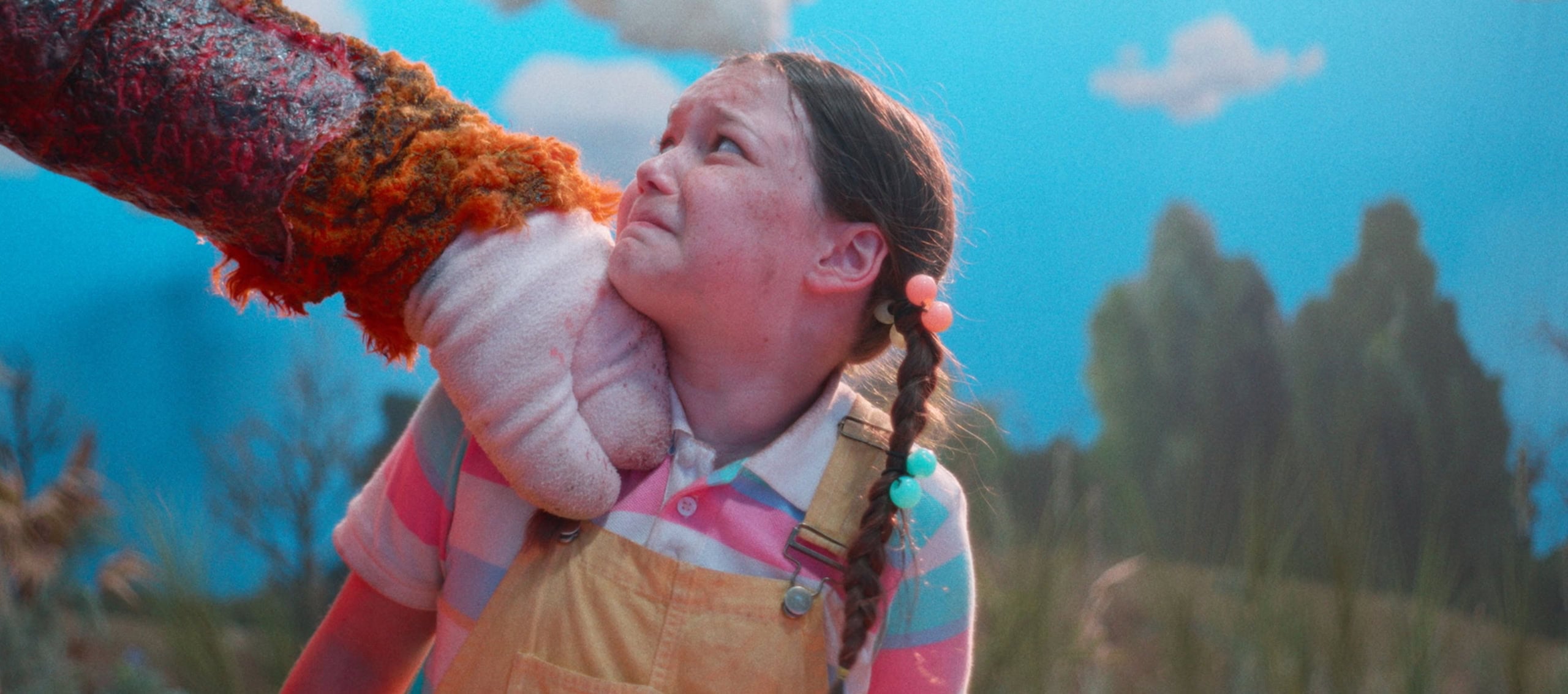
These children are surrounded by imagery, situations and dialogue deliberately designed to corrupt everything we associate with safe children’s entertainment. Some of that dialogue goes into spaces I couldn’t imagine a parent wanting to explain to their own child. Watching performers this young commit so completely to those moments made me uncomfortable beyond what was happening to their fictional characters. I can praise what Delaney Quinn and Caleb Williams accomplish while still admitting that watching them accomplish it made me uncomfortable. And maybe that’s partially the point. Kelly wants BUDDY to make us uncomfortable, and he succeeds. But it also left me wondering where the line exists between using childhood innocence to create effective horror and pushing that innocence into material that feels overwhelmingly adult. That question stayed with me long after the blood and insanity stopped.
Final Verdict
BUDDY works because it commits completely to its madness. It plays like a children’s program from hell, never leaving you prepared for what comes next. The laughs are uncomfortable, the violence is unapologetic and the colorful children’s television aesthetic only makes everything happening inside it feel more disturbing. Keegan-Michael Key delivers a seriously creepy Buddy, Cristin Milioti once again proves how effectively she can tap into terror, and Delaney Quinn and Caleb Williams deserve massive credit for performances requiring an impressive level of commitment at such young ages.
True horror fans looking for something weird, bloody and willing to push boundaries may find plenty to appreciate here. Everyone else should know exactly what they’re walking into. And parents? Keep the kids out of the room for this one. Don’t let the colorful sets, songs, talking unicorn or young cast fool you. BUDDY may wear the skin of children’s entertainment, but what’s underneath is absolutely intended for adults. Temper your expectations and keep your children far, far away.
Buddy is NOT here to make any friends!
BUDDY is in theaters now. It is rated R for bloody violence, some drug content and language – all involving children with a runtime of 96 minutes.
Reporter: Keith ‘Klep’ Napier. He is the CEO and Editor-in-Chief of Critix. You can find his reviews, interviews, and other cool works at WeAreCritix.com, as well as on social: Twitter, Instagram, Facebook, and Youtube.





Leave a Reply